Buy majorca.net ?
We are moving the project
majorca.net .
Are you interested in purchasing the domain
majorca.net ?
domain@kv-gmbh.de · 0541-91531010
Buy majorca.net ?
Can you prove that sin(3phi) = 3sin(phi) + 4sin^3(phi)?
Yes, the identity sin(3phi) = 3sin(phi) - 4sin^3(phi) can be proven using the triple angle formula for sine. The triple angle formula states that sin(3phi) = 3sin(phi) - 4sin^3(phi). This can be derived using the sum and difference identities for sine and the double angle formula. Therefore, sin(3phi) = 3sin(phi) - 4sin^3(phi) is a proven identity. **
How much is Phi?
Phi, also known as the golden ratio, is approximately equal to 1.61803398875. This irrational number is derived from the ratio of two quantities where the ratio of the sum of the quantities to the larger quantity is the same as the ratio of the larger quantity to the smaller one. Phi is a unique number that appears in various aspects of art, architecture, and nature due to its aesthetically pleasing properties. **

Similar search terms for Phi
Top-Angebote
Products related to Phi:
-
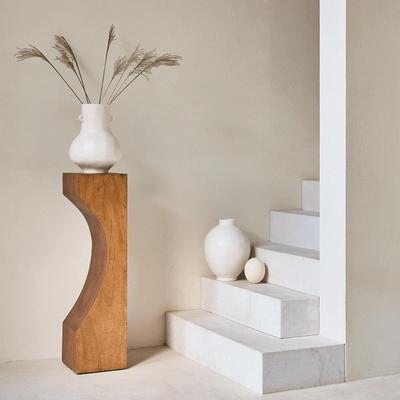
Urban Nature Culture Vase RelaxedQuiet elegancy comes to life in Urban Nature Culture's vase Relaxed. Handmade in Portugal, this ceramic vase has a shape beyond anything you've seen - it's organic, it flows and steals your heart with its playful ear.123,40 $*Shipping: 0,00 $Secure redirect to the provider
-
Urban Nature Culture Vase Talvi - WhiteFloating the sea waves, a sense of calm takes over, feeling at home in the world. That same feeling we get at home, like a safe haven to relax our senses and feast our eyes on our most cherished things.267,80 $*Shipping: 0,00 $Secure redirect to the provider
-
Urban Nature Culture Vase Ace - AceSetting forth a tradition that is centuries old, pottery has ever been one of Portugal's trades. Urban Nature Culture loves to work with Portuguese artisans - who use their skills to combine modern looks and contemporary design with techniques of old.145,60 $*Shipping: 0,00 $Secure redirect to the provider




-
How is Phi calculated?
Phi (Φ) is calculated using the following formula: Φ = (1 + √5) / 2. This formula is derived from the Fibonacci sequence, where each number is the sum of the two preceding ones. As the sequence progresses, the ratio of consecutive Fibonacci numbers approaches Phi. This ratio is also known as the "golden ratio" and is approximately equal to 1.618. **
-
What is the schedule like for a combined trip to Phuket, Phi Phi, and Krabi?
A combined trip to Phuket, Phi Phi, and Krabi typically involves spending a few days in each destination. The schedule may include activities such as island hopping, snorkeling, visiting beautiful beaches, exploring local markets, and enjoying the nightlife. Travelers can also take day trips to nearby attractions such as the Phi Phi Islands, James Bond Island, and Railay Beach. The schedule allows for a mix of relaxation and adventure, with plenty of opportunities to experience the natural beauty and culture of each destination. **
-
What is a T-Phi diagram?
A T-Phi diagram is a graphical representation used in geology to show the relationship between porosity (Phi) and permeability (T) of a rock formation. It helps geologists and engineers understand the fluid flow characteristics of a reservoir by plotting data points for different rock samples. The diagram is divided into different zones that represent the flow behavior of the rocks, such as tight, transition, and high-permeability zones. By analyzing the T-Phi diagram, professionals can make informed decisions about the production potential of a reservoir. **
-
What does Phi signify in mathematics?
In mathematics, Phi (Φ) is the symbol used to represent the golden ratio, which is approximately equal to 1.618. The golden ratio is a special number that appears in various natural and artistic phenomena, and it has been studied for its aesthetic and mathematical properties. It is often found in art, architecture, and nature, and it is known for its pleasing and harmonious proportions. The golden ratio has also been studied in the context of Fibonacci numbers and is a key concept in the field of geometry and algebra. **

What is the r-phi plane?
The r-phi plane is a coordinate system used in physics and engineering to represent the position of an object in a two-dimensional space. In this coordinate system, the radial distance from a central point is represented by the "r" coordinate, and the angle from a reference direction is represented by the "phi" coordinate. It is commonly used in fields such as particle physics and astronomy to analyze the trajectories and positions of particles or objects in circular or rotational motion. The r-phi plane is particularly useful for visualizing and analyzing circular or rotational motion in a simple and intuitive way. **
How do you calculate the Phi function?
The Phi function, denoted as φ(n), calculates the number of positive integers less than or equal to n that are relatively prime to n. To calculate φ(n), you can first factorize n into its prime factors. Then, for each prime factor p, you can calculate p-1 and multiply all the results together. This formula can also be expressed as φ(n) = n * (1-1/p1) * (1-1/p2) * ... * (1-1/pk), where p1, p2, ..., pk are the distinct prime factors of n. **
Top-Angebote
Products related to Phi:
-
Urban Nature Culture Vase RelaxedQuiet elegancy comes to life in Urban Nature Culture's vase Relaxed. Handmade in Portugal, this ceramic vase has a shape beyond anything you've seen - it's organic, it flows and steals your heart with its playful ear.123,40 $*Shipping: 0,00 $Secure redirect to the provider
-
Can you prove that sin(3phi) = 3sin(phi) + 4sin^3(phi)?
Yes, the identity sin(3phi) = 3sin(phi) - 4sin^3(phi) can be proven using the triple angle formula for sine. The triple angle formula states that sin(3phi) = 3sin(phi) - 4sin^3(phi). This can be derived using the sum and difference identities for sine and the double angle formula. Therefore, sin(3phi) = 3sin(phi) - 4sin^3(phi) is a proven identity. **
-
How much is Phi?
Phi, also known as the golden ratio, is approximately equal to 1.61803398875. This irrational number is derived from the ratio of two quantities where the ratio of the sum of the quantities to the larger quantity is the same as the ratio of the larger quantity to the smaller one. Phi is a unique number that appears in various aspects of art, architecture, and nature due to its aesthetically pleasing properties. **
-
How is Phi calculated?
Phi (Φ) is calculated using the following formula: Φ = (1 + √5) / 2. This formula is derived from the Fibonacci sequence, where each number is the sum of the two preceding ones. As the sequence progresses, the ratio of consecutive Fibonacci numbers approaches Phi. This ratio is also known as the "golden ratio" and is approximately equal to 1.618. **
-
What is the schedule like for a combined trip to Phuket, Phi Phi, and Krabi?
A combined trip to Phuket, Phi Phi, and Krabi typically involves spending a few days in each destination. The schedule may include activities such as island hopping, snorkeling, visiting beautiful beaches, exploring local markets, and enjoying the nightlife. Travelers can also take day trips to nearby attractions such as the Phi Phi Islands, James Bond Island, and Railay Beach. The schedule allows for a mix of relaxation and adventure, with plenty of opportunities to experience the natural beauty and culture of each destination. **
Similar search terms for Phi
-
Urban Nature Culture Vase Talvi - WhiteFloating the sea waves, a sense of calm takes over, feeling at home in the world. That same feeling we get at home, like a safe haven to relax our senses and feast our eyes on our most cherished things.267,80 $*Shipping: 0,00 $Secure redirect to the provider
-
Urban Nature Culture Vase Ace - AceSetting forth a tradition that is centuries old, pottery has ever been one of Portugal's trades. Urban Nature Culture loves to work with Portuguese artisans - who use their skills to combine modern looks and contemporary design with techniques of old.145,60 $*Shipping: 0,00 $Secure redirect to the provider
-
What is a T-Phi diagram?
A T-Phi diagram is a graphical representation used in geology to show the relationship between porosity (Phi) and permeability (T) of a rock formation. It helps geologists and engineers understand the fluid flow characteristics of a reservoir by plotting data points for different rock samples. The diagram is divided into different zones that represent the flow behavior of the rocks, such as tight, transition, and high-permeability zones. By analyzing the T-Phi diagram, professionals can make informed decisions about the production potential of a reservoir. **
-
What does Phi signify in mathematics?
In mathematics, Phi (Φ) is the symbol used to represent the golden ratio, which is approximately equal to 1.618. The golden ratio is a special number that appears in various natural and artistic phenomena, and it has been studied for its aesthetic and mathematical properties. It is often found in art, architecture, and nature, and it is known for its pleasing and harmonious proportions. The golden ratio has also been studied in the context of Fibonacci numbers and is a key concept in the field of geometry and algebra. **
-
What is the r-phi plane?
The r-phi plane is a coordinate system used in physics and engineering to represent the position of an object in a two-dimensional space. In this coordinate system, the radial distance from a central point is represented by the "r" coordinate, and the angle from a reference direction is represented by the "phi" coordinate. It is commonly used in fields such as particle physics and astronomy to analyze the trajectories and positions of particles or objects in circular or rotational motion. The r-phi plane is particularly useful for visualizing and analyzing circular or rotational motion in a simple and intuitive way. **
-
How do you calculate the Phi function?
The Phi function, denoted as φ(n), calculates the number of positive integers less than or equal to n that are relatively prime to n. To calculate φ(n), you can first factorize n into its prime factors. Then, for each prime factor p, you can calculate p-1 and multiply all the results together. This formula can also be expressed as φ(n) = n * (1-1/p1) * (1-1/p2) * ... * (1-1/pk), where p1, p2, ..., pk are the distinct prime factors of n. **
* All prices are inclusive of VAT and, if applicable, plus shipping costs. The offer information is based on the details provided by the respective shop and is updated through automated processes. Real-time updates do not occur, so deviations can occur in individual cases. ** Note: Parts of this content were created by AI.